
Originally Published on April 13th 2026 by Andrew Duffin and edited by Alex Coupland. Updated by Andrew Duffin and Republished on October 4th 2026.
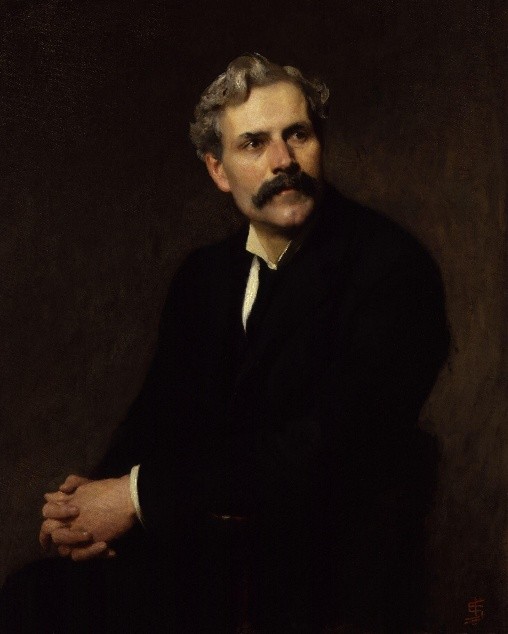
The Labour Party tends to have an uneasy relationship with its past election-winning prime ministers. Wilson can be viewed as a scheming technocrat who was more focused on keeping the show on the road than providing any form of ideology or direction, while Blair is seen as a war-mongering neoliberal. Although the jury is still out on Starmer, I doubt whether there will be total veneration of the man anytime soon. Only the most ‘improbable’ Mr Attlee remains a figure of near-universal affection. Which leaves us with Ramsay MacDonald, the man who started it all. In this article I intend to determine whether MacDonald was a traitor or a tragic hero.
MacDonald was born the bastard son of John MacDonald in Lossiemouth in 1866. MacDonald was in education until the age of 15. After which he worked a variety of clerical jobs then after a brief stint in Bristol he moved to London and became involved in the nascent world of socialist politics. In 1896, he married the bright and beautiful Margaret Gladstone. Who provided him with the financial security and time for politics, as well as a devoted companion to turn to and depend on. MacDonald joined the Independent Labour Party, later becoming the founding member of the more moderate Labour Representation Committee in 1900. After two previous failed attempts, MacDonald was elected MP in 1906, aided by the Gladstone-MacDonald pact he formed with the Liberals, which allowed Labour candidates to run without the competition of Liberals in areas with stronger Labour support. MacDonald himself saw aspects of liberalism as the forerunner in building a socialist society, a disposition which would in time, invite increasing scrutiny from the ranks of the Labour party.
In 1911, MacDonald suffered tragedy his wife Margaret passed away leaving him as father to their 5 remaining children. He was left distraught; he later found refuge in the comfort of friendships with various Tory women. The most fabled was with Lady Londonderry which remained a source of gossip for the rest of his political career. By time of the First World War, MacDonald demonstrated an independence of mind by opposing British involvement. Matters came to a head when he voted against £100 million worth of war credits intended to finance the war. Ramsay MacDonald failed to convince many of his Labour colleagues to acquiesce to his point of view. Leading him to resign as Labour Party leader and being derided as a pacifist and unpatriotic. Most famously being expelled from his beloved Moray Golf Club, though the Scotsman did later join the competing Spey Bay Golf Club. MacDonald lost his seat in the 1918 election in the aftermath of the controversy.
It took until 1922 when MacDonald would return to the Commons, by this time he was vindicated in the eyes of the public as the horrors of war became ever more apparent. MacDonald was reappointed party leader to a burgeoning parliamentary party of 142 MPs. By stroke of luck, in 1924 the Conservative prime minister, Stanley Baldwin decided to squander his parliamentary majority over the issue of tariff reform. In the subsequent general election, a hung parliament was formed, with the Liberals finishing third place. Leaving old Asquith as kingmaker, he chose to support MacDonald, under his presentiment that Labour’s policies were impractical and the MacDonald government would soon crumble. MacDonald abnegated the more radical areas of the socialist canon, leaving Clause 4 on the back burner, and instead focused on a programme of mild social reform. Leading to an extension of benefits to the elderly and unemployed improvements to workers’ rights (sickness grants, minimum wages for agricultural workers and the establishment of Safety-First Organisations) and increased council house building. MacDonald also served concurrently as Foreign Secretary. In which, he effectively dealt with the crisis of French occupation of the Ruhr Valley following Germany’s defiance of the Treaty of Versailles reparation payments. The Liberals foreclosed on the Labour government by September of 1924 over the Campbell Case. Where the neophyte Attorney General dropped a case against a communist newspaper editor for alleged “incitement to mutiny” on learning that the editor was also a courageous navy veteran who had lost all of his feet to gangrene in WW1. Which resulted in another general election, where Labour gained an additional million votes. However, the Campbell Case and the forged Zinoviev letter suggested Soviet influence on the Labour government in the minds of the electorate. Which scared former Liberal voters into jumping ship to the Tories, resulting in a Conservative landslide majority leaving Labour as the largest opposition party.
Although MacDonald’s government, failed to produce any grandiose accomplishments and MacDonald floundered on his promise of an equal franchise for women, it performed a crucial political function. In reassuring the electorate that Labour could be trusted with power and was not the fanatical Bolshevik force as portrayed by its opponents. It achieved this despite the right-wing press’s attempts to lend credibility to the faked, alarmist Zinoviev letter. Though cabinet ministers’ adherence to correct court dress on meeting King George V, ruffled a few feathers within the Labour movement. Fearing that Labour risked becoming too comfortable with the very establishment it had been formed to repudiate.
During opposition, MacDonald remained committed to the parliamentary cause and expressed distaste for the General Strike of 1926. Back at the ballot box in 1929, Labour had won its first plurality in parliament, yet fell short of a majority, resulting in the formation of another minority government. Once again, it pursued a programme of social reform. However, in October of that year, the Wall Street Crash pushed Britain into an economic slump. Unemployment shot up, whilst MacDonald’s ever-orthodox chancellor, Philip Snowden encouraged spending cuts in order to deflate the economy. He hoped that it would attract foreign investment to aid Britian’s adherence to the gold standard. Whereas progressive reformers, spurred on by the writings of John Maynard Keynes, called for deficit spending in order to stimulate the economy. The crisis climaxed in 1931 after the collapse of an Austrian bank fuelled further troubles in Britain. As a result of divisions within the cabinet over additional spending cuts, MacDonald went to the King intending to resign the premiership. During his audience with George V, the King observed that despite the minority Labour government being at sixes and sevens over the spending cuts, there was a majority in parliament in favour of them. The King therefore persuaded MacDonald to form a National Government of Labour, Liberal and Conservative parliamentarians. Which could help shield against further vicissitudes of governing during such a crisis.
This was anathema to the mood of the Labour Movement, MacDonald and Snowden were expelled from the party. A general election was called on the National Government, later in 1931. With the public robbed of much electoral choice, MacDonald was returned with the greatest ‘mandate’ of any prime minster in the history of British democracy. But the victory bore an uncanny resemblance with defeat. Although the National Government was returned with 554 MPs, 473 of these were Conservatives, only 13 were ‘National Labour’ and a few Liberals in the mix. Effectively MacDonald became prisoner of a Conservative majority, increasingly dominated by Baldwin. Any remaining affection for MacDonald was squandered in the election, as he had to campaign for National Government candidates against those of the Labour Party, often exploiting the red-scare tactics that had once been used against himself.
MacDonald soldiered on as prime minster until 1935; the economy gradually began to recover but his health declined. He retained an interest in foreign affairs. however his commitment to pacifism was increasingly out of step with the realities of a militarising Germany under the Hitler’s leadership. Stanley Baldwin, with the title ‘Lord President of the Council’, was running the shop. Though MacDonald’s presence did allow Baldwin to pass some of the more contentious legislation like greater self-government for India despite opposition from imperialist Conservatives. After resigning the premiership, MacDonald was given the now-token role of ‘Lord President of the Council’, lingering on through the 1935 general election. By which time, much of the pretence of a ‘National Government’ was lost, as Liberals and MacDonald’s ally Philip Snowden had left the government over the abandonment of free trade at the Ottawa conference of 1932.
MacDonald resigned as minister with the retirement of Baldwin in May 1937 and died just four months later in November of that year.
MacDonald’s buoyant leadership of the Labour party into two periods of government ended in animosity and frustration. MacDonald‘s excessive restraint as leader driven by a desire to make Labour electorally palatable to middle England, led him to espouse a vague, woolly socialism. Which lacked any form of a coherent vision for the country suffering in the aftermath of the Great Depression. Attlee referred to MacDonald’s decision to form a National Government as ‘the greatest betrayal in the political history of the country’, Whereas Lloyd George dismissed him as little more than a ‘fussy Baldwin’. MacDonald’s pacifism and fruitless pursuit of disarmament in the early 1930s served him no favours either. To me, MacDonald’s life exemplifies the struggle between pragmatism and principle that festers on in the Labour party to this day.
I do think MacDonald decided to form a national government because he believed that it was in the country’s interests, and as demonstrated in his opposition to WW1 he was no mere careerist. However, his commitment to the responsibilities of power increasingly alienated him from the reforming convictions that propelled him to prominence. Which leaves one wondering what the socialist firebrand of the 1900s would have thought about the beleaguered, pusillanimous prime minister of the 1930s, clinging on to the remaining fragments of power whilst his political base and health floundered around him. Perhaps, after the loss of his wife, politics ceased to be his vocation but his remaining source of identity. To which he clung, until the very bitter end. So, was MacDonald a traitor or a tragic hero? Although his contributions to the founding of the Labour Party are all too often overlooked, it cannot be denied that MacDonald failed to leave any substantial ideological legacy to defend or denounce. Leaving me at the conclusion that MacDonald’s premiership will remain as an awkward, incongruous chapter of the Labour Party’s history.
Please note: the views expressed in this article do not necessarily reflect those of the wider Labour club.